
A Castle Rock guide to calmer nights—without “knocking yourself out”
Summer in Colorado can be a perfect storm for sleep disruption: warmer bedrooms, later sunsets, travel or changing routines, and anxiety that feels louder when the day finally gets quiet. If you’re lying awake with racing thoughts, waking up drenched or restless, or feeling exhausted but “wired,” you’re not alone—and you’re not broken. Sleep is a body-and-brain process, and when stress, temperature, and schedule drift stack up, even good sleepers can start struggling.
The “triple trigger”: heat, anxiety, and routine shifts
Sleep problems often aren’t caused by one thing. In summer, three common drivers show up together:
1) Heat & temperature discomfort
When your body can’t cool down, it’s harder to fall asleep and stay asleep. Many sleep resources recommend a cooler bedroom—often around the mid-60s °F—as a helpful range for most adults. Warmer rooms can reduce sleep efficiency and increase wake-ups.
2) Anxiety & “hyperarousal”
An anxious brain stays alert for threats—even when you’re safe in bed. That can look like racing thoughts, body tension, a fast heartbeat, or replaying conversations. Over time, the bed itself can become a cue for worry: “What if I can’t sleep again?”
3) Summer schedule drift
Travel, kids home from school, later nights outdoors, or weekend sleep-ins can shift your internal clock. Even a 60–90 minute shift can create “social jet lag,” making it harder to feel sleepy at your usual time.
Key idea: If you address only one factor (like buying a new pillow) but ignore anxiety or routine changes, sleep may improve briefly—then slide back. The most reliable progress comes from a layered plan.
Quick context: when sleep problems become “insomnia”
A few rough nights after a trip or a heat wave can be normal. But when trouble falling asleep, staying asleep, or waking too early starts happening regularly—and it affects daytime function (mood, focus, energy, motivation)—it’s worth getting support.
Evidence-based note
Clinical guidelines consistently recommend Cognitive Behavioral Therapy for Insomnia (CBT-I) as a first-line treatment for chronic insomnia, because it addresses both sleep behaviors and the thoughts that keep sleep stuck.
Did you know? (Small shifts that can make a big difference)
Cooler air can support sleep onset
Your core body temperature naturally drops as you prepare for sleep. A warm room can fight that process, keeping you restless longer.
Alcohol can worsen middle-of-the-night waking
It may feel sedating at first, but sleep can become lighter and more fragmented later in the night.
Sleep hygiene helps—but usually isn’t enough by itself
Basic habits (consistent schedule, limiting caffeine, calming wind-down) matter, but persistent insomnia often needs a structured approach like CBT-I plus anxiety support.
A practical, non-heavy-medication sleep plan for summer
Start with the steps below for 10–14 days. If you’re not improving, that’s not failure—it’s a signal to personalize the plan with professional support.
Step 1: Cool your sleep environment (without overcomplicating it)
Aim for a comfortably cool room (many people do best around the mid-60s °F). If your home can’t stay that cool:
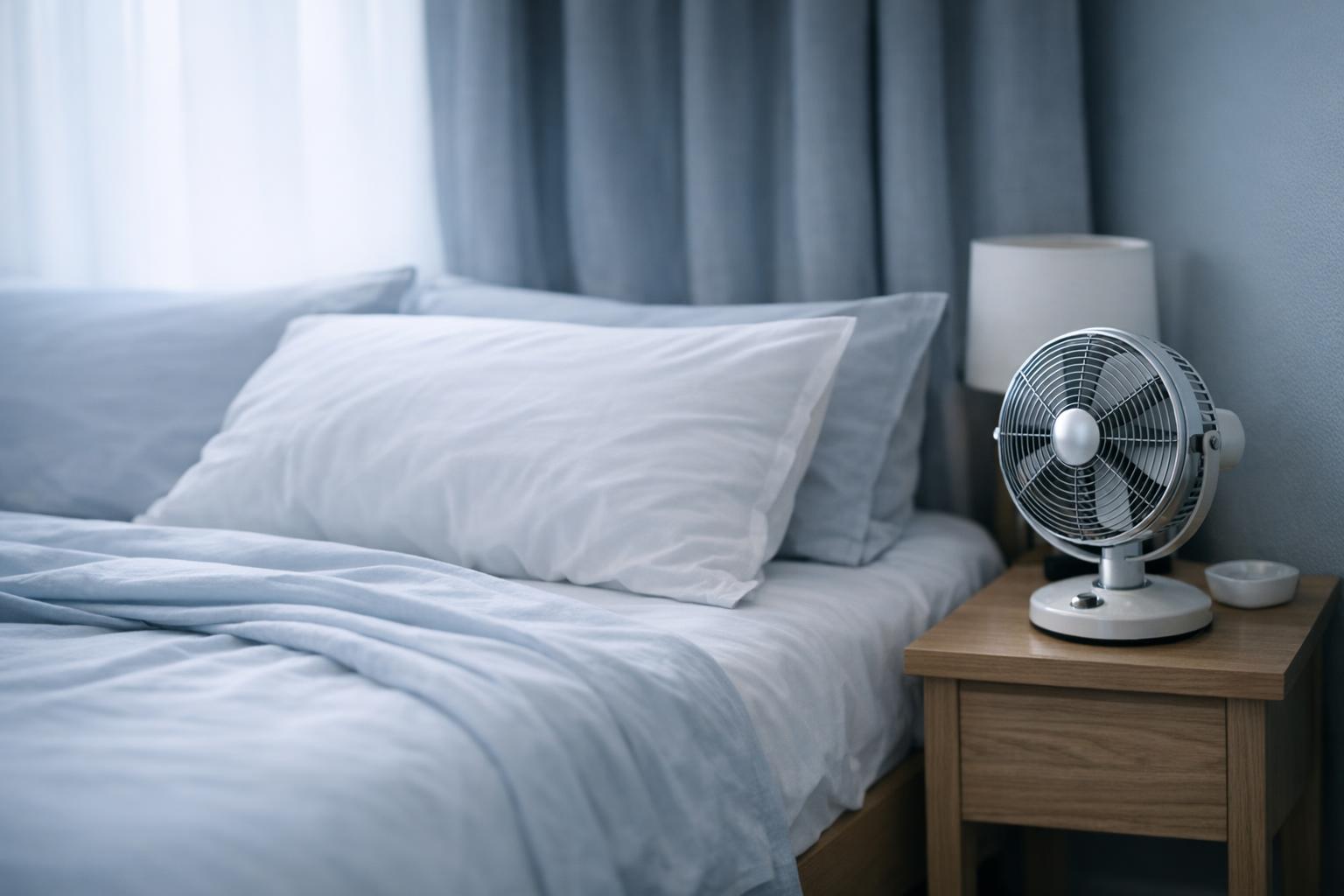
• Use a fan for air movement (it can feel cooler even if the thermostat doesn’t change much).
• Try breathable bedding (cotton, bamboo, moisture-wicking materials) and lighter sleepwear.
• Take a warm (not hot) shower 60–90 minutes before bed—counterintuitively, it can help your body cool afterward.
• Keep sunlight out in the late afternoon with curtains/blinds to reduce heat buildup.
Step 2: Anchor your wake time (especially after travel)
If your schedule has shifted, choose a realistic wake time and keep it consistent for at least 1–2 weeks—even on weekends. This is one of the fastest ways to reset sleep drive and circadian rhythm. If you need a nap, keep it short and earlier in the day.
Step 3: Reduce “bed = stress” conditioning
If you’re awake for what feels like ~20–30 minutes, consider getting out of bed and doing something quiet and dim (reading, gentle stretching, a calming audio). Return to bed when sleepy. This breaks the cycle of staring at the clock and teaching your brain that bed is a place for rest, not rumination.
Step 4: Use an anxiety “off-ramp” before your head hits the pillow
Racing thoughts often need a planned container. Try one of these:
• 10-minute brain dump: Write everything down, then circle what you can control tomorrow.
• “Worry window” earlier in the evening: Schedule 15 minutes to worry on purpose—so bedtime isn’t the first time your brain gets to speak.
• Values-based reset (ACT-style): Ask, “What matters tomorrow if I’m tired?” Then choose one small, kind action you can do anyway.
Step 5: Watch the top sleep disruptors (the boring basics that work)
Strong sleep habits reduce vulnerability to heat and anxiety. Common evidence-informed tips include:
• Keep caffeine earlier in the day (many people notice a big difference when they cut it off after lunch).
• Avoid large, heavy meals close to bedtime.
• Limit alcohol near bedtime if you wake in the middle of the night.
• Keep your bedroom dark and quiet; reduce bright screens during wind-down.
Quick comparison table: “What’s keeping me up?” clues
| What you notice at night | Most likely driver | First thing to try (48–72 hours) |
|---|---|---|
| Hot, sweaty, restless; wake-ups increase on warm nights | Temperature/ventilation | Cooler room + fan + breathable bedding + pre-bed cooling routine |
| Racing thoughts, tight chest, “wired but tired” | Anxiety/hyperarousal | Worry window + journaling + breathing/grounding + stimulus control if awake |
| You fall asleep late, can’t wake up on time, feel “off” after weekends/travel | Circadian drift | Anchor wake time + morning light + limit late naps |
| You wake at 2–4 a.m. and can’t get back to sleep | Stress, alcohol timing, temperature swings, learned insomnia pattern | Limit alcohol near bedtime, stabilize room temp, use get-out-of-bed reset |
Note: This table can guide self-steps, but it doesn’t replace medical or mental health evaluation—especially if symptoms are intense, new, or worsening.
How Premier Mental Health Healing Pathways supports long-term sleep stability
When sleep loss is tied to anxiety, mood shifts, trauma stress, or persistent insomnia patterns, it helps to address both the mind and the nervous system. At Premier Mental Health Healing Pathways in Castle Rock, Colorado, care can include therapy and psychiatric services tailored to your needs and preferences—especially if you want improvement without relying on heavy medications.
Approaches that often pair well with sleep goals
• Treatment Approaches to match you with the right modality (not a one-size plan)
• Acceptance & Commitment Therapy (ACT) for anxious thoughts, sleep-related worry, and values-based routines
• Compassion-Focused Therapy to soften self-criticism that fuels nighttime rumination
• Solution-Focused Brief Therapy (SFBT) for practical sleep goals and fast, trackable steps
• Integrative Counseling Services to address lifestyle, stress physiology, and mind-body patterns
• LIFE System Quantum Biofeedback for stress regulation support (as part of a broader plan)
If your sleep disruption is happening alongside panic symptoms, depression, trauma symptoms, or medication side effects, a psychiatric evaluation can clarify what’s driving the pattern and which options fit your comfort level.
When to seek help sooner (not later)
Reach out promptly if you have severe daytime impairment, symptoms lasting more than a few weeks, loud snoring/gasping, restless legs sensations, worsening anxiety, or if you’re using alcohol or sedatives to force sleep.
Ready for a personalized sleep-and-anxiety plan?
If summer heat, anxiety, or schedule changes are disrupting your sleep, you don’t have to manage it alone. Support is available for adults, teens, and families in Castle Rock and surrounding Colorado communities.
FAQ: Summer insomnia, anxiety, and heat
What’s the best room temperature for sleep during summer in Colorado?
Many adults sleep best in a cooler room—often around the mid-60s °F. The “right” number is the one that prevents sweating or shivering and helps you stay asleep. If you can’t cool the whole home, focus on the bedroom with a fan, curtains, and breathable bedding.
Why does anxiety feel worse at night?
Nighttime is quieter, distractions drop, and the brain can “scan” more for unresolved tasks or worries. If you’ve had a few bad nights, sleep itself can become the worry—creating a loop of tension and alertness.
Should I take melatonin for summer sleep problems?
Melatonin can be useful for circadian timing (like travel or shifted schedules), but it isn’t always the best tool for anxiety-driven insomnia. If you’re unsure what’s driving your sleep disruption, a clinician can help you choose a strategy that matches the root cause and avoids unwanted side effects or interactions.
What if I keep waking up around 3 a.m.?
Common contributors include stress physiology, alcohol timing, temperature swings, and learned insomnia patterns. Start with stabilizing the room temperature, reducing alcohol near bedtime, and using a calm “reset” if you’re awake too long (get out of bed briefly, low light, return when sleepy). If it persists, CBT-I-informed care can be very effective.
When is insomnia a sign I should talk to a mental health provider?
If sleep problems last more than a few weeks, affect daytime functioning, or come with significant anxiety, low mood, panic symptoms, or reliance on alcohol/sedatives, it’s time to reach out. Early support can prevent a short-term issue from becoming a long-term pattern.
Do you offer approaches beyond talk therapy?
Yes. Premier Mental Health Healing Pathways offers a range of therapeutic approaches and integrative options, plus psychiatric services when appropriate—so your plan can match your symptoms, your biology, and your preferences.
Glossary
CBT-I (Cognitive Behavioral Therapy for Insomnia)
A structured, evidence-based therapy for insomnia that targets sleep behaviors (like schedule and time in bed) and sleep-interfering thoughts (like fear of not sleeping).
Hyperarousal
A state of heightened alertness in the brain and body that makes it difficult to fall asleep or stay asleep (often linked to stress and anxiety).
Circadian rhythm
Your internal 24-hour clock that helps regulate sleepiness and alertness. Light exposure and consistent wake times are two powerful ways to stabilize it.
Stimulus control
A CBT-I strategy that strengthens the association between bed and sleep by limiting wakeful activities in bed and resetting when you’re awake too long.
ACT (Acceptance & Commitment Therapy)
A therapy approach that builds psychological flexibility—helping you respond differently to stressful thoughts and feelings while moving toward what matters most to you.



)
No comment