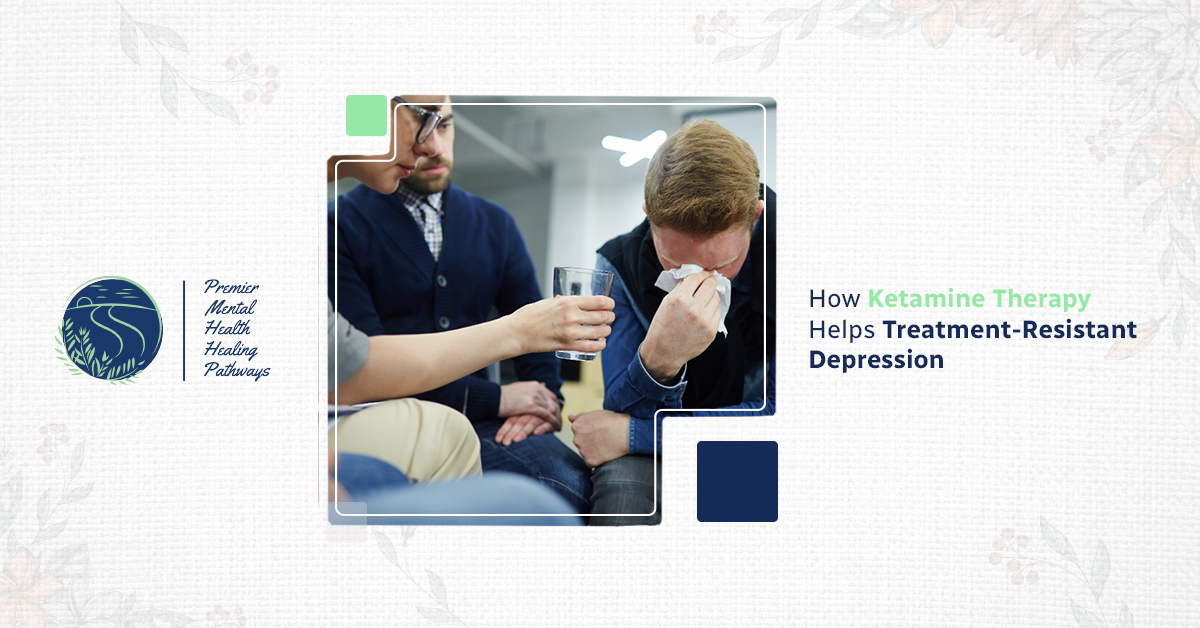
You are not alone if you have tried standard medication for treatment-resistant depression (TRD) and it hasn’t worked. TRD affects almost 30% of people with major depression. It can feel hopeless, but ketamine therapy is becoming a powerful, quick-acting treatment for it.
We offer this new treatment to help patients feel better when other treatments don’t work. This guide explains how ketamine therapy works, what the most recent research says about it, and what you can expect during treatment.
What Is Treatment-Resistant Depression?
If you try at least two different antidepressants at the right doses for a long enough time and your depression symptoms don’t get better, you have Treatment-Resistant Depression (TRD). Keep in mind that you are not “failing” treatment; your depression is just harder to deal with.
Common Signs of TRD
When people with TRD even follow their therapy and medication plans, they often still have symptoms that don’t go away, such as:
- Chronic low mood
- Very low energy
- Feelings of hopelessness
- Suicidal thoughts
How Does Ketamine Therapy Work?
Unlike other antidepressants, ketamine changes the brain’s glutamate system. For learning and excitement, glutamate is the most important neurotransmitter.
When you take the drug in small amounts, it blocks NMDA receptors from working. This increases brain-derived neurotrophic factor (BDNF) by increasing the amount of glutamate. This supports neuroplasticity, which is how new connections are made between neurons. It works by “rewiring” patterns that are stuck in areas of the brain that control mood, such as the prefrontal cortex.
The result is that mood swings go away quickly, usually in a few hours or days, and there are fewer thoughts of suicide. According to recent tests, comparison of IV ketamine to esketamine nasal spray suggests that IV forms may work faster by directly improving synaptic plasticity.
How well does Ketamine work for TRD?
Recent clinical studies validate Ketamine’s effectiveness as a robust treatment for Treatment-Resistant Depression (TRD). Here is a breakdown of the most recent evidence that it works:
- High Response Rates: According to reviews from Harvard Health and the New England Journal of Medicine (NEJM), Ketamine works for 50–70% of people with TRD.
- IV Ketamine vs. Esketamine: A 2025 study by Mass General Brigham looked at different ways to give Ketamine and found that intravenous (IV) ketamine worked better than esketamine, reducing symptoms by about 49% compared to esketamine, which only worked by about 40%.
- Comparison to ECT: In some cases, like with outpatients or people with moderate to severe depression, Ketamine worked better than ECT.
- Emerging Oral Options: Phase 2 trials published in Nature Medicine show that oral and extended-release forms may be good for home use, providing long-lasting benefits and better tolerability.
- Long-Term Durability: Maintenance therapy and repeat doses may help benefits last longer, though long-term results are still being studied.
Forms of Ketamine Therapy
- IV Ketamine Infusions: This is the method that has been examined at the most. These are usually given in the clinic for 40 to 60 minutes after the first six sessions.
- Esketamine Nasal Spray (Spravato): A non-invasive option that the FDA has approved. It needs to be given to patients under close medical supervision.
We tailor the delivery method to your specific needs, often integrating medication with therapy to ensure lasting results.
Potential Side Effects and Safety
Most people do well with ketamine therapy when they get the right dose. But patients should know what could happen. Some common side effects of ketamine are:
- A feeling of being “out of body” or temporarily separated from your body
- High blood pressure
- A little bit of feeling sick or dizzy
But these symptoms usually go away quickly. To keep patients safe, treatments should only happen in clinical settings where professionals can watch for unusual risks, like the possibility of misuse.
It’s important to get a full medical checkup because not everyone can take Ketamine. For example, people with certain heart problems can’t. Current research suggests a positive long-term safety profile; however, ongoing monitoring is crucial to prevent dependence.
Is Ketamine Right for You?
Ketamine could be a breakthrough for people who haven’t found relief from traditional medications, especially those who want quick relief from severe symptoms. But it doesn’t work on its own; it works best when used with other treatments.
It is a big step forward in the treatment of depression and other mental health issues. It works quickly and is useful in cases where other treatments have failed. You can get great treatment at Premier Mental Health Healing Pathways if you live in or near Castle Rock, Colorado. We offer caring advice to help you figure out what to do.
FAQs
What is treatment-resistant depression, and how does Ketamine help?
People with treatment-resistant depression (TRD) don’t get better after taking at least two antidepressants. Ketamine affects glutamate pathways, makes the brain more flexible, and often works in a few hours or days.
Is Ketamine therapy effective compared to traditional treatments?
Patients who have not found relief from other treatments may find help and hope in ketamine. Ketamine could save lives because it helps people who are considering suicide.



No comment