
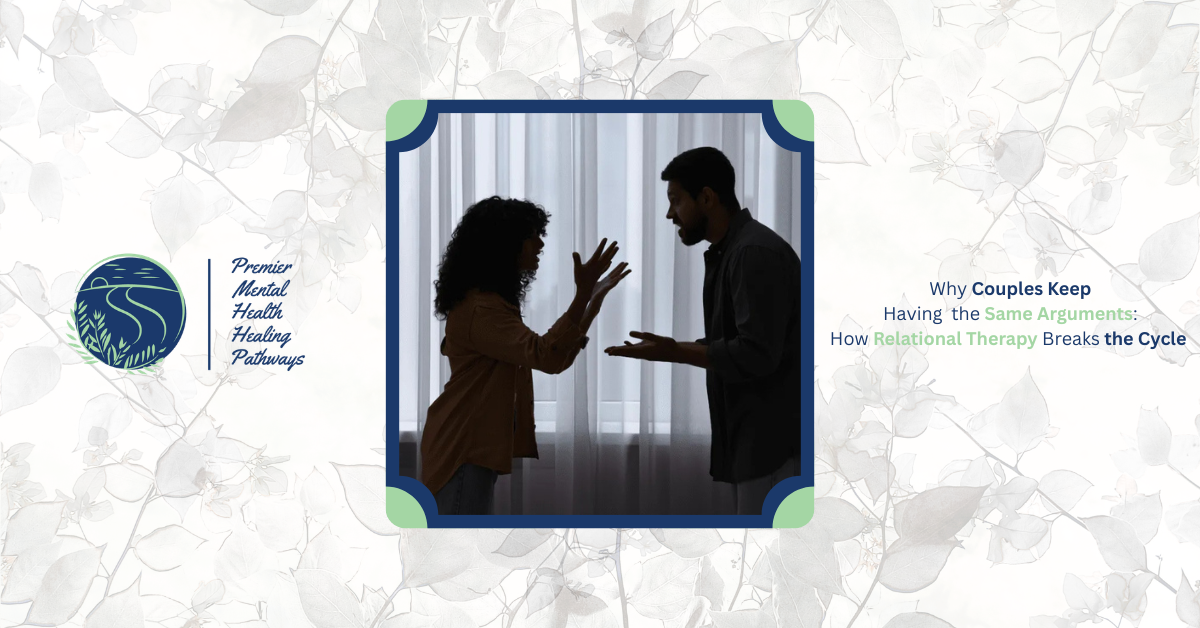
Imagine the following: a casual discussion about picking up the garbage turns into an intense argument over respect. It is a tiresome loop to be trapped in, as recurrences of the same argument, whether it is with a spouse or a relative. These disputes are recurrent and usually destroy our relationship.
But why, with good intentions, do we keep having the same fights? It is frequently the case with hidden emotional dynamics. Relational therapy saves meaningful relationships by identifying underlying causes and offering the skills required to enhance communication. Understanding why these arguments recur and how to solve them are essential steps towards a healthier relationship.
Understanding Recurring Arguments: The Hidden Patterns
Do you and your partner feel like you’re stuck in a loop, arguing over the same things over and over, like dirty dishes or money? You’re not alone. A lot of the time, the problems that keep coming up aren’t really about the subject at hand; they’re about unmet emotional needs.
This is the psychology behind why these patterns keep happening and what’s really going on.
The Conflict Iceberg
Your arguments are like an iceberg. The apparent conflict (the dirty laundry) is only the tip. The real issue lies beneath the surface: fear, anger, or a need to feel cherished.
When you argue about the schedule, you may be feeling ignored or unimportant.
Common Triggers for Repetitive Conflict
To stop the cycle, you need to know what keeps it going. Three things that often cause trouble are:
Learned Communication Patterns
We tend to imitate the conflict styles we observed during childhood. You may withdraw in case your family swept things under the rug. You might become defensive if they were loud and confrontational. These subconscious responses influence how we handle ongoing conflicts.
Clashing Styles
One side may want to solve the issues right now (the pursuer), while the other needs time to process (the distancer). Such a mismatch leads to a frustrating process in which the harder one tries to push the other, the further the other pulls.
External Stress
In some cases, it is not the relationship that is the issue but life. The stress of money and parenting requirements, or the stress of the job, can leave your fuse very short, and minor misunderstandings can be turned into big blowouts.
Why These Patterns Persist
Repetitive arguments persist because they have become habits. They are predictable even in times when they feel uncomfortable. Some common reasons include:
Protective responses
Human beings may defend themselves or choose not to be vulnerable by arguing. Anger is usually easier to express than hurt or fear.
Automatic reactions
The brain will grow used to automatic reactions, such as yelling, shutting down, or being defensive.
Lack of tools
Healthy communication and conflict-resolution skills have not been taught to many people.
These patterns can make you feel like you’re walking down a path that has been walked many times before. It feels like home, but it keeps taking you to the same place.
Signs You’re Stuck in a Conflict Cycle
If you keep doing the same thing over and over, it could be because of:
- Minor problems quickly turn into significant disagreements
- The same problems keep coming up
- You feel emotionally drained after fights
- One or both people think that the other person isn’t listening or understanding them
- Anger stays with you long after a fight is over
Noticing triggers is a good first step. You can see patterns by writing in a journal or thinking about when and how fights start.
What Is Relational Therapy?
Relational therapy is an approach based on the idea that being around other people is suitable for your mental health and emotional well-being. Relational therapists don’t just look at your symptoms; they also look at how the way you talk to and connect with other people affects your life.
This method is based on the idea that relationships can cause emotional wounds, so healing means finding better ways to connect with other people. Clients learn how to better handle other people’s feelings and situations by being real and focusing on empathy.
Key Components of Relational Therapy:
- Pattern Recognition: Find and stop patterns of behavior that keep happening in your interactions.
- More Empathy: Find out more about your own feelings and those of others.
- Better Communication: Understand practical ways to stop being defensive and solve problems.
- Emotional Awareness: Get to know the emotional triggers and the physical responses involved in conflict.
How Relational Therapy Breaks the Argument Cycle
Breaking the cycle of recurring arguments isn’t about avoiding disagreement. It’s about changing how people handle problems.
Identifying Root Causes
Therapy can help you identify deeper emotional reasons for your problems, such as fear of rejection, feeling undervalued, or experiences from past relationships. It’s easier to understand and less likely to blame when you know where these feelings come from.
Rebuilding Communication
Relational therapy provides skills like:
- Paying close attention
- Saying “I feel” instead of blaming someone
- Stopping conversations that are getting out of hand
- Asking for what you want in a clear and polite way
For example:
Instead of saying, “You never listen,” it might be better to say, “I feel unheard when you interrupt me.”
These small changes can make a big difference in minimizing conflict.
Creating Lasting Change
People often change over time:
- More aware of how they feel
- Better at talking to people
- Better ways to fix things
- A stronger connection between feelings
Some couples and families also benefit from regular check-ins to discuss problems before they escalate into big fights.
Benefits of Relational Therapy
People often experience:
Greater self-awareness
Knowing emotional triggers will enable individuals to act thoughtfully and not automatically
Stronger relationships
Better communication enhances trust and intimacy.
Better coping during stress
Relational therapy guides individuals through challenging life transitions and challenges more effectively.
Reduced relational stress
Arguments decrease in frequency and intensity with time.
When to Seek Relational Therapy
Consider seeking help if:
- You continue to have the same arguments.
- The process of communication is stressful or challenging.
- There is an increasing emotional distance.
- Conflict is affecting sleep, mood, or daily functioning.
- Self-help strategies haven’t created lasting change.
Therapy doesn’t mean you’ve failed; it’s a step toward having better relationships.
If fighting is hurting your relationship or your mental health, relational therapy can help you figure out why you keep fighting and how to talk to each other in a better way. The first step toward making fundamental changes is often to speak to a qualified therapist.
Conclusion
People keep having the same arguments because of deeper emotional problems, not just because they disagree on the surface. These cycles are likely to recur without new tools or understanding.
Relational therapy helps you understand what causes your problems, communicate better, and strengthen your emotional relationships. This method can help you learn and grow from conflicts over time. You can communicate more clearly, build stronger relationships, and get help when you need it.
At Premier Mental Health Healing Pathways, we specialize in helping individuals, couples, and families improve relationships and communication. We utilize different evidence-based treatment approaches based on each person’s unique needs, goals, and experiences. Getting professional help can be a good first step toward making things better for good if you keep having the same fights.
FAQs
What makes relational therapy different from couples counseling?
Relational therapy helps people understand how they relate to others and develop healthier ways of interacting by examining their emotional patterns and the dynamics of their relationships.
How long does it take to see improvement?
Some people notice changes in how they talk and how aware they are after just a few sessions, but it may take longer for deep-seated patterns to change.
Can relational therapy help family relationships?
Yes. It works for relationships between romantic partners, family members, friends, and coworkers.
Can recurring arguments affect mental health?
Yes. If you argue a lot, you might feel stressed and anxious, have trouble sleeping, and feel emotionally drained. If you learn how to talk to people more healthily, these effects will be much less severe.




No comment